
Forex Risk Management: The Complete Guide for 2026
Most traders don’t lose money because of bad strategy.
They lose because they don’t know how to protect money.
You can learn the perfect entry. You can follow the best signal.
But if you risk too much on one trade, the market will wipe you out in one day.
That’s why forex risk management is more important than any strategy.
So what is it?
Forex risk management is just deciding how much you can afford to lose before you click “Buy” or “Sell”.
It’s your safety plan.
In this guide, I’ll explain everything in simple words.
We’ll cover stop loss, position sizing, and trading risk with real examples.
No confusing terms. Just what you need to survive and grow in 2026.
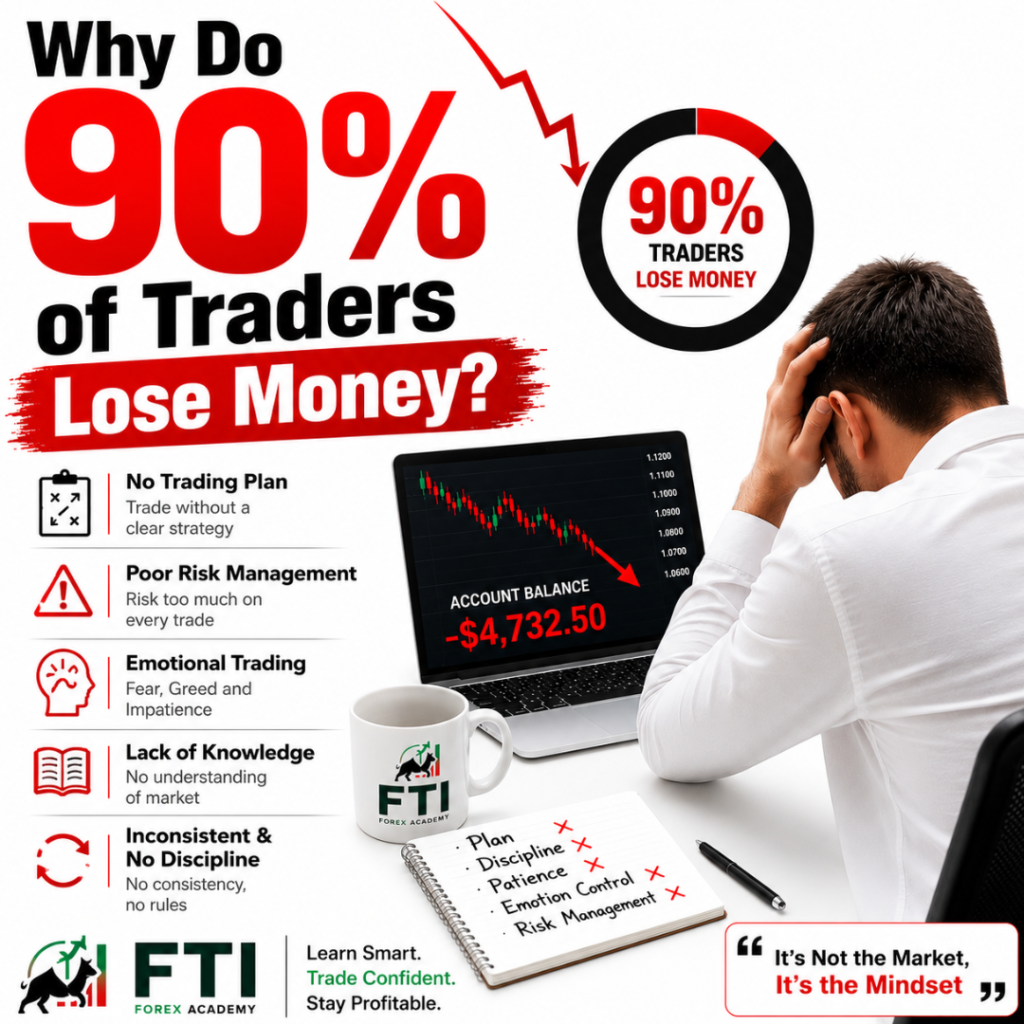
Why Do 90% of Traders Lose Money?
It’s not because they’re dumb. It’s because they ignore risk.
Here are the 3 mistakes I see every day with new traders:
- No Stop Loss
- “I’ll close it manually”. Then news comes, price gaps 100 pips, and account is gone.
- As Investopedia says, a stop loss order is your automatic exit when things go wrong.
- Wrong Lot Size
- Risking 10% or 20% of your account on one trade because you “feel confident”.
- 2 losses and you’re down 40%. Game over.
- Trading with Emotion
- You lose one trade. You get angry. You double the lot size to recover fast.
- That’s called revenge trading. And it always ends badly.
IBM calls risk management “identifying and controlling threats to capital”.
For traders, the threat is us. Our greed, our fear, our ego.
The market is not your enemy. Lack of rules is.
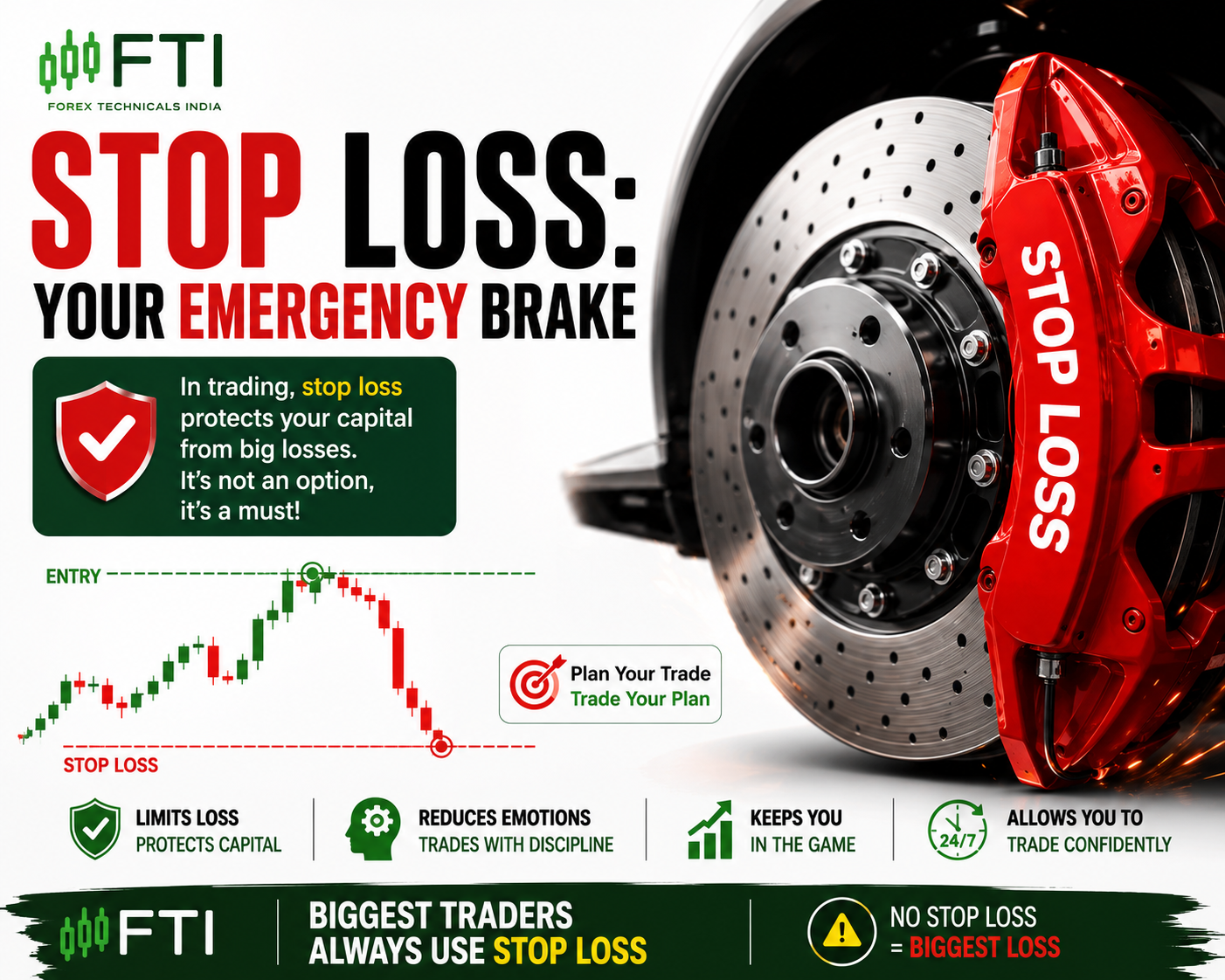
Pillar 1 – Stop Loss: Your Emergency Brake
What is a Stop Loss?
A stop loss is an automatic order that closes your trade if price goes against you.
Think of it like brakes in a car. You hope you don’t need it, but you must have it.
Why You Can’t Trade Without It
- You sleep.
- The market doesn’t. News can hit at 3 AM.
- Emotions lie.
- In a losing trade, your brain says “wait, it will reverse”. A stop loss doesn’t listen.
- It gives you control.
- Before entering, you know “Max loss on this trade = $10”. That’s peace.
How to Set It Correctly
Don’t put stop loss randomly. Put it where your trade idea is wrong.
3 easy ways:
- Technical Level: Below support or above resistance.
- ATR Method: Give the trade room based on market volatility.
- Fixed Pips: For beginners, 30 to 50 pips on major pairs.
FTI Rule: No stop loss = No trade. Period.
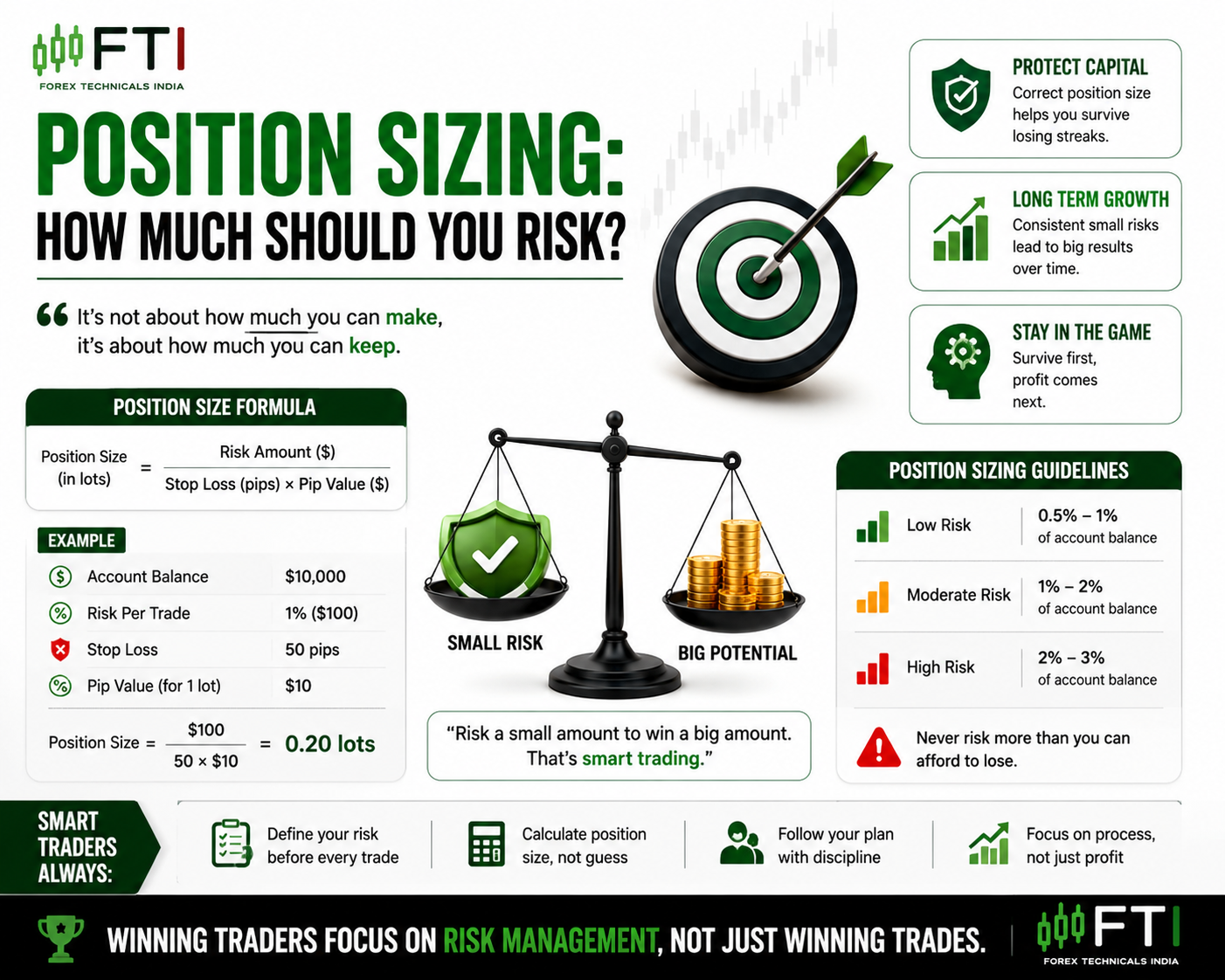
Pillar 2 – Position Sizing: How Much Should You Risk?
This is where most people get confused.
What is Position Sizing?
Position sizing means deciding how many lots to trade.
It answers: “My stop loss is 40 pips. How big should my trade be?”
Follow the 1% Rule
This is used by banks and pro traders.
Never risk more than 1% to 2% of your account on one trade.
Example:
- Account = $1000
- 1% Risk = $10
- Stop Loss = 50 pips
- So you should risk $0.20 per pip. That’s 0.02 lots.
Why this matters:
If you lose 10 trades in a row, you’re only down 10%. You can recover.
But if you risk 10% per trade, 3 losses and you’re out.
Don’t do the math manually. Use a forex lot size calculator or pip value calculator.
At FTI we give all students a free calculator for this.
Remember:
Position sizing doesn’t make you more profit. It keeps you alive long enough to make profit.
Pillar 3 – Trading Risk: The Bigger Picture
Managing one trade is good. Managing your whole account is better.
Here are 4 rules for trading risk in 2026:
1. Risk to Reward Ratio
Only take trades where you can make 2x what you risk.
Risk $10 to make $20
Even if you win only 4 out of 10 trades, you’ll still be profitable.
2. Daily Loss Limit
Set a rule:
“If I lose 2% today, I stop trading.”
Close the laptop. Go for a walk. Come back tomorrow.
This stops revenge trading.
3. Don’t Overtrade
Taking 10 trades because you’re bored is not trading. It’s gambling.
Quality > Quantity.
Wait for A+ setups.
4. Keep a Trading Journal
Write every trade:
- Entry
- Stop Loss
- Why you took it
- How you felt
After 30 days you’ll see:
“I lose money when I trade during news.”
That awareness alone will save you thousands.